The 30-Minute Myth

I'm Mr. ALFA. At this shop we tell the stories of real cars, with the names changed and the lessons intact. Today's story defends two employees who did nothing wrong, and puts the blame where it belongs: on an idea that sounds logical and isn't.
A businessman keeps his car in the garage of a Miami high-rise. He leaves for Paris for a few weeks and gives his people one clear order: go down every day, start the car, and let it run for thirty minutes, so the battery doesn't die.
The order was carried out. Every day, thirty minutes, an engine echoing between concrete pillars. When the gentleman returns from Paris, he walks down to the garage, turns the key, and hears what no traveler wants to hear after a nine-hour flight: click, click, click. Nothing.
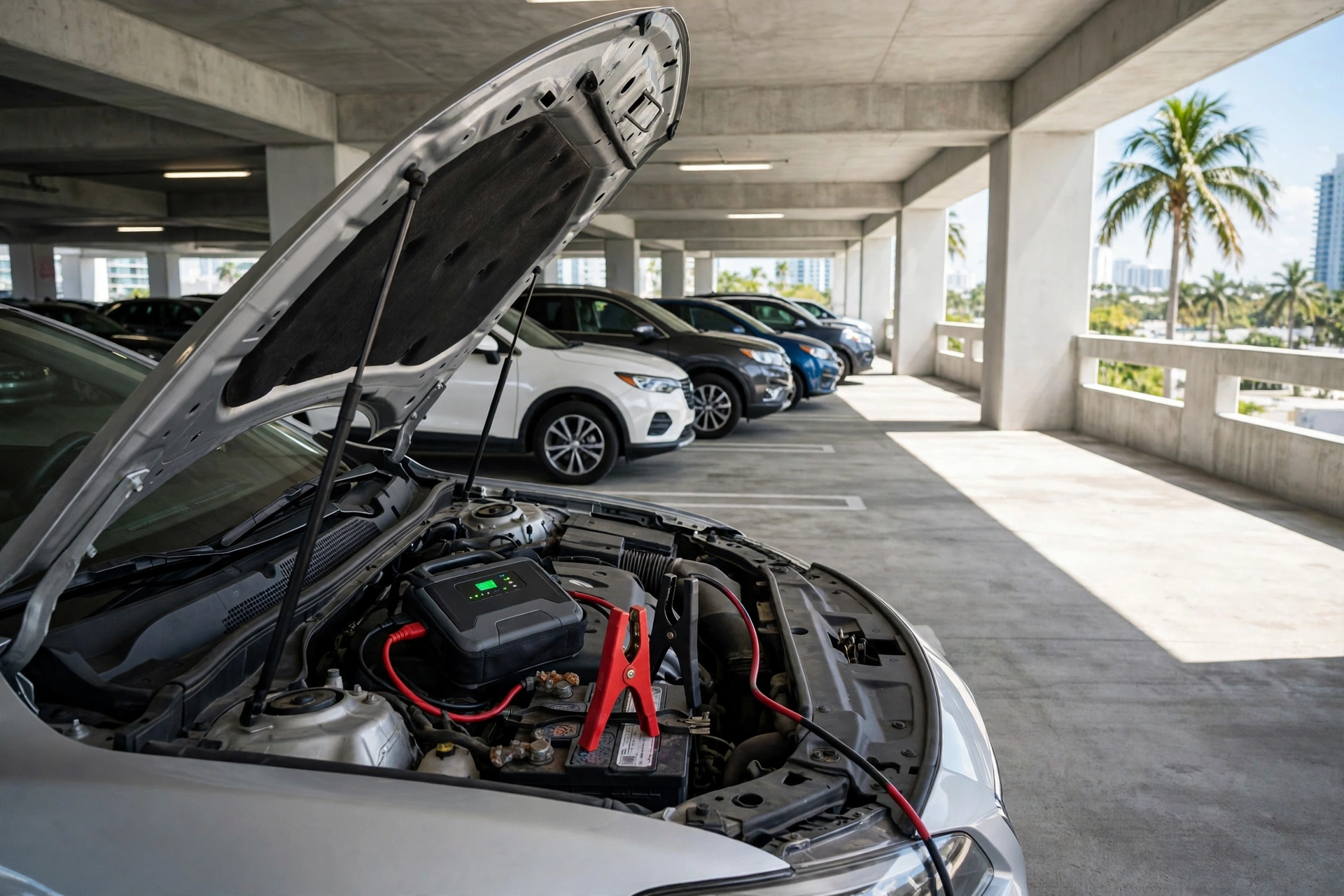
The owner's conclusion was immediate, and, it must be said, unfair: my people never started it. If they had, the battery would be alive. There was anger, there were accusations, and the battery ended up at our shop, where we tested it and it delivered its own verdict: it was dead. Truly dead, the kind that no charge brings back.
In defense of the employees
Start with the question everyone asks: does the alternator charge the battery while the car is standing still? Yes. The alternator is belt-driven and charges whenever the engine turns; the car does not need to move. Up to there, the gentleman's idea was right.
The problem is how much. At idle, at 600 to 800 RPM, an alternator delivers only 30 to 50 percent of its capacity. And the car itself drinks first from that small output: the computers, the fuel pump, the ignition, the fans, the lights. What is left for the battery is next to nothing, and with the air conditioning on it can be less than nothing.
But the biggest blow is the one nobody sees: starting the engine is the single largest expense a battery ever makes. AAA says it plainly: short trips do not give a battery the complete recharge it needs after paying for a start, and running the car for 30 to 60 minutes, the old remedy, will usually not recover it and will shorten its life. We see it measured at the shop: an alternator needs roughly fifteen minutes of idling just to repay that one start. Thirty minutes a day, in practice, is working hard to end up almost where you began, a little lower every day.
One week of the routine
This is what happens to a typical modern car, with a healthy battery of about 60 amp-hours, while everybody believes it is being taken care of:
| Moment | What really happens |
|---|---|
| Every start | The most expensive moment of the day. The alternator needs about 15 minutes of idling just to repay that start, with nothing extra stored. |
| The 30 minutes running | At idle, the car consumes nearly everything the alternator produces. The net charge reaching the battery is close to zero, and negative with the A/C on. |
| Every night, off | A modern car never fully sleeps: alarm, smart key, telematics. That phantom draw, 20 to 50 milliamps, eats the battery in silence, with no witnesses. |
| End of the week | They started it 7 times, they did everything "right," and the battery ends the week with less charge than it had when the week began. |
| Weeks 4 to 6 | Charge hovers around 60 percent. Inside, sulfate crystals have hardened on the plates: the damage is permanent. Same box, smaller battery inside it every week. |
| The day of the click | It was not that day. It was every day, following orders. |
And one detail that stings: AAA's own Car Doctor warns that it is the cycling, the draining and half-charging, that shortens a battery's life, and that a battery that has died once may never recover 100 percent of its original capability, even after a full recharge. Three or four deep discharges, and many batteries never come back.
What actually works
- Drive it, really drive it. Thirty minutes on the road, at street and highway speed, once a week. That is where the alternator spins the way it was designed and real charge goes in. It is AAA's recommendation, and it is ours.
- A battery maintainer. For a car that sleeps in a garage, this is the elegant answer: a small device that stays connected and keeps the battery full without overcharging it. It costs less than one battery and works alone, every day, no employees required. The manufacturers know it: Lexus, in its official long-term storage bulletin, orders the 12-volt battery inspected every 30 days on stored vehicles.
- If it already failed to start: jump it and take it for a real drive, do not leave it idling on the spot. And that battery deserves a test: after a full discharge, its life is already marked.
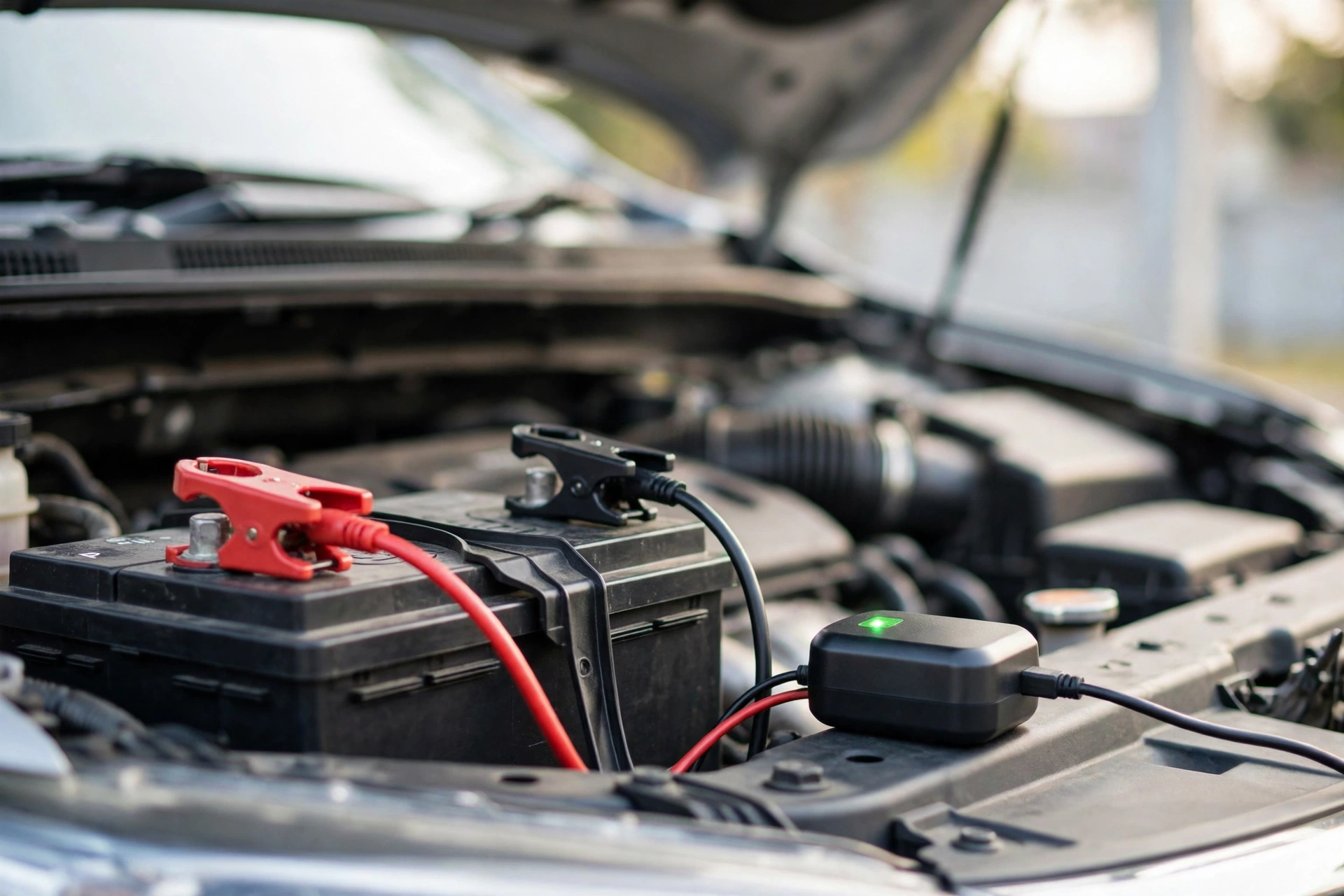
And what about disconnecting the battery in the meantime? On an older car, that was the trick. On a modern car, our advice is don't: disconnect it and the computers lose their memories, and when you reconnect it the dashboard lights up like a Christmas tree while the car relearns what it already knew. You solve one problem and manufacture three.
What cannot be solved by guessing is how much your car draws while it sleeps, and how much life that battery truly has left. That is not a guess: it is a measurement, taken with the right equipment, and with the number in hand you make the plan before the click makes it for you. That is shop work, and it is what we are here for.
The employees are innocent. They started the car every day, exactly as ordered. What killed the battery was the order itself: starting a parked car does not charge it, it wears it down. Next time a car is going to sleep for weeks, do not wake it up every day to tire it out. Leave it with a maintainer, or take it out and drive it the way it should be driven.
